
- Home
- PRODUCT CENTER
- ABOUT US
- BLOG
- Application
- FAQ
- CATALOGUE
- Contact Us
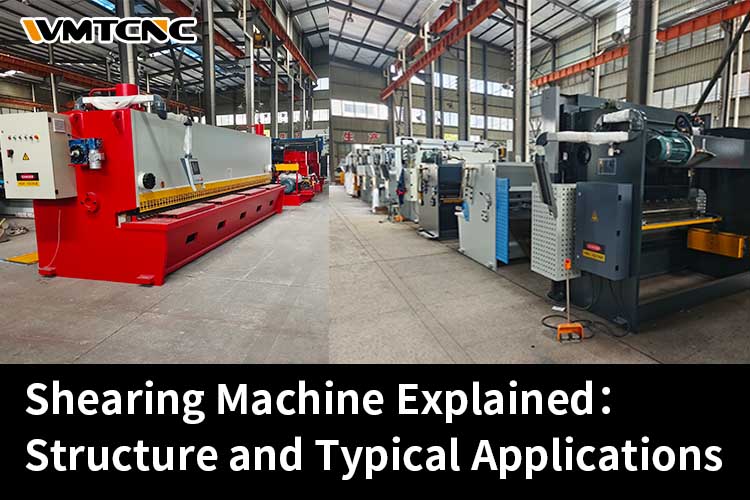
Shearing machines are industrial equipment that achieve straight-line separation of metal sheets through the relative motion of upper and lower blades. Featuring relatively simple construction, high efficiency, and straight cut edges, they are widely used in sheet metal fabrication, automotive, shipbuilding, home appliances, construction, and aerospace industries. As metal processing equipment, shearing machines not only mark the starting point of sheet metal fabrication but also serve as a prerequisite for subsequent processes such as bending, welding, and stamping.
Compared to thermal cutting methods such as laser and plasma cutting, shearing offers advantages in low energy consumption, high speed, and superior straight-line precision. It is particularly well-suited for high-volume standardized blanking operations. Consequently, shearing holds an irreplaceable foundational position in modern manufacturing.

The core principle of a shearing machine lies in the shearing force generated between the upper and lower blades. When the upper blade moves downward under drive, stress concentration occurs at the blade edge where the sheet metal is positioned. This process unfolds in three distinct stages:
Elastic Deformation: Upon blade contact with the sheet metal, the metal undergoes slight deformation;
Plastic Deformation: As pressure increases, localized areas of the plate enter a plastic state, forming distinct deformation zones;
Crack Propagation: When stress exceeds the shear strength, cracks propagate along the cutting edge, causing the plate to fracture and separate.

Blade Clearance
Excessive clearance may cause burrs;
Insufficient clearance increases tool wear;
For 6mm low-carbon steel plates, setting blade clearance at 5%–7% of plate thickness yields optimal cuts.
Shear Angle
Proper angle settings reduce shear force;
Helps lower energy consumption and minimize material deformation.
Pressure Holding Device
Ensures stable plate positioning without shifting during cutting;
Particularly crucial for hard materials like stainless steel, requiring higher clamping force and high-hardness blades.
The precise adjustment of these parameters directly determines the final cutting quality.

The shearing machine consists of several key components, each contributing to stable operation and cutting precision.
– Frame: The main support structure bearing all shearing forces
– Blade System: Upper and lower blades performing the cutting action
– Clamping Device: Secures the sheet material
– Back Gauge: Provides length positioning
– Drive System and Control System: Deliver power and operational support respectively
– Safety Devices: Ensure operator safety
| Component | Function | Description |
|---|---|---|
| Frame / Bed | Overall support | Bears the shearing force, ensures rigidity |
| Shear Blades | Cutting core | Upper and lower blades work together to cut |
| Hold-down Device | Fixes the sheet | Prevents slipping and warping |
| Back Gauge | Length positioning | Controls dimensions, modern models often CNC-driven |
| Drive System | Power source | Includes mechanical, hydraulic, or servo drive |
| Control System | Operation & control | Manual, electric, or CNC system |
| Safety Device | Operator protection | Emergency stop, photoelectric guard, safety fence |
In actual production, users typically encounter several common models of shearing machines. Different types have distinct advantages and disadvantages in terms of power source, cutting precision, and application scenarios. For a clear comparison of their differences, refer to the table below:
| Type | Features | Typical Applications |
|---|---|---|
| Mechanical Shearing Machine | High speed, simple structure, low cost; but strong impact, high energy consumption | Batch cutting of mild steel |
| Hydraulic Shearing Machine | High stability, good accuracy, low noise | Multi-material, medium-thick plate processing |
| CNC Shearing Machine | High automation, good accuracy, easy operation | Modern factories, high-efficiency production lines |
| Servo-Driven Shearing Machine | High precision, energy-saving, suitable for intelligent production | High-end manufacturing, CNC automated lines |

Shearing machines find applications across virtually all industries involving metal sheet processing. Requirements vary across different sectors:
– Sheet metal fabrication: Cutting large sheets into standard-sized blanks to prepare for subsequent processes like bending and welding.
– Automotive manufacturing: Ensuring dimensional consistency for body panels, chassis components, and other parts through precise cutting accuracy and uniformity.
– Aerospace: Demanding extreme precision and material strength, CNC hydraulic shears are commonly used to process aluminum and titanium alloys, minimizing waste.
– Home Appliance Industry: Emphasizes efficiency, requiring rapid cutting of sheet metal for refrigerator, washing machine, and air conditioner housings.
– Construction and Steel Structures: Steel plates and profiles must be pre-cut to guarantee precision in subsequent installation.
– Shipbuilding: Pre-cutting of thick steel plates is essential for hull welding and assembly.
– Agricultural Machinery: Metal sheets for tractor and harvester components rely on shearing machines for blanking.
To ensure stable equipment operation and personnel safety, observe the following key points during operation:
– No-load Test Run: Operate without load before startup. Verify normal functioning of hydraulic and electrical systems.
– Gap Adjustment: Adjust blade gap according to sheet thickness and material to prevent rough cuts or tool wear.
– Prohibit Overpressure and Excess Thickness Operations: Strictly prohibit cutting plates exceeding the equipment’s permissible thickness.
– Hydraulic Inspection: Regularly monitor oil pressure and temperature. Maintain within specified ranges to prevent overheating or abnormalities.
– Secure Material Positioning: Firmly clamp the plate before operation to prevent warping or displacement during cutting.
– Safety Measures: Ensure emergency stop, photoelectric protection, and guardrails are fully functional. Power must be disconnected when adjusting the material stop.
With technological advancements, shearing machines have evolved from mechanical to hydraulic and then to servo-electric models, progressively meeting higher demands for precision and automation. Regardless of the application field, they remain indispensable foundational equipment in the metal processing chain.


Tags: Shearing Machine
