
- Home
- PRODUCT CENTER
- ABOUT US
- BLOG
- Application
- FAQ
- CATALOGUE
- Contact Us
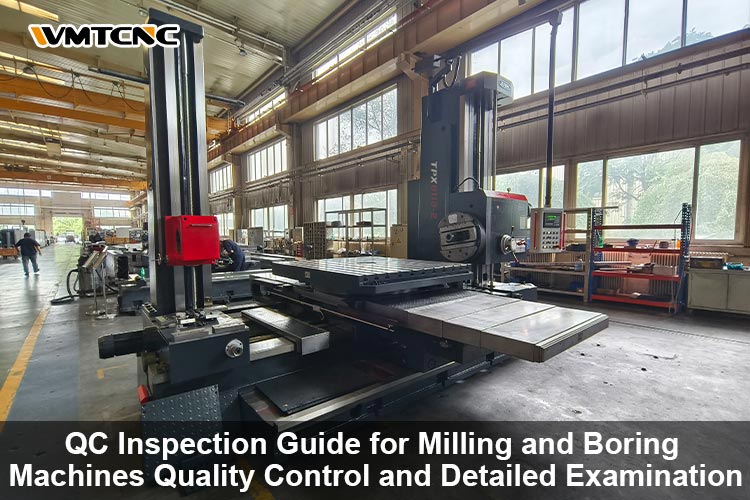
As precision machining equipment, the quality of milling and boring machines directly impacts production efficiency and machining accuracy. Therefore, rigorous quality inspection and acceptance must be conducted before delivery to customers. This article details the primary inspection items and key considerations for QC acceptance of milling and boring machines based on practical inspection experience. This ensures each machine meets customer quality requirements and production standards.

The first comprehensive inspection conducted after the equipment is assembled at the factory. This includes understanding the milling and boring machine’s technical parameters, configuration, and the customer’s specific requirements. Since the model and technical specifications of milling and boring machines vary by manufacturer and customer needs, each detail of the machine must be thoroughly examined against the requirements and specifications outlined in the contract.
Documentation and Configuration Verification
Cross-reference the contract, technical appendices, and packing list to confirm the model and configuration. This includes the system/main drive/boring spindle and ram/rotary table or turntable/lubrication, hydraulic, and cooling systems/electrical components. Simultaneously verify that accompanying documentation (manuals, circuit diagrams, inspection records) is complete and consistent.
Markings and Nameplates
Verify that model plates, serial number plates, technical specification plates, manufacturer logos, and safety warnings are complete, accurate, properly installed, and clearly legible.
Installation and Environment
Confirm that the foundation meets leveling requirements, ventilation, temperature/humidity conditions, cleanliness, power/air/coolant connections, and handling/lifting conditions satisfy equipment specifications.
Appearance and Finish
The machine body paint finish should be smooth and even, free of blisters, cracks, sagging, scratches, and noticeable color variations. Edges and seams should be properly finished, and guards/covers should be intact.
Assembly Integrity
All external screws, castings, brackets, and covers are present and securely fastened. Guide rails and critical mating surfaces are free of sand holes, burrs, rust, and scratches; protective covers slide smoothly and lock reliably.
Cleaning and Rust Prevention
T-slots, rotary table slots, sheet metal cavities, etc., are free of oil residue, casting sand, debris, and rust spots. Critical surfaces have undergone rust prevention treatment.

Mechanical precision is a critical inspection item during milling and boring machine acceptance, directly impacting machining accuracy and equipment stability. Key inspection items include:
Spindle Precision: Inspect spindle operation at various speeds to ensure smooth, noise-free performance. Pay particular attention to reverse rotation and low-speed operation for abnormal noises or vibrations. Adjust the spindle system if anomalies occur.
Table Accuracy: Includes table flatness, perpendicularity, and positioning accuracy. Measure the table using precision instruments to ensure compliance with standard requirements.
Axis Movement Accuracy: Conduct full-range motion tests for the X, Y, and Z axes to verify normal travel without binding or misalignment. Pay particular attention to the accuracy of the Z-axis upper and lower limits and its smoothness during movement.
Cutting Accuracy Testing: Perform actual machining tests to evaluate the milling and boring machine’s cutting performance, machining precision, and surface finish. The machined workpiece surface must exhibit no significant defects and meet customer production requirements.
The electrical system constitutes the core control component of the milling and boring machine. During inspection, it is imperative to ensure the electrical system is safe, stable, and compliant with international safety standards. Inspection items include:
Electrical Cabinet and Power Distribution System: Verify the sealing integrity and cleanliness of the electrical cabinet, ensuring all electrical components are properly installed. Wiring must be standardized, orderly, and clearly labeled.
Control System Functionality Testing: Conduct functional tests on the control system to ensure all buttons, switches, sensors, and other control devices operate correctly. Pay particular attention to the responsiveness of critical components such as the main motor start button and emergency stop button.

The hydraulic and cooling systems are critical for the long-term stable operation of milling and boring machines. During inspection, ensure both systems are in perfect working order:
Hydraulic System: Check for stable oil pressure and secure hydraulic hose connections. Pay attention to any oil leaks; if detected, address them promptly.
Cooling System: Verify that components such as the cooling water tank and pump are functioning properly, ensuring unobstructed water flow. The cooling system effectively reduces equipment operating temperatures.

The accessories and tools of milling and boring machines significantly impact daily operations and machining efficiency. Therefore, during inspection, special attention should be paid to the completeness and quality of accessories:
Accessory Inspection: Verify that all accessories are present and ensure each meets quality standards. Accessories include toolboxes, operation manuals, cutting tools, etc.
Tooling Inspection: Verify that applicable toolholding systems and rapid tool-changing devices are provided. Ensure tools can be changed conveniently to enhance work efficiency.
Upon completion of the inspection, a detailed acceptance report must be compiled. The report shall include:
Inspection Items: List all inspection items and actual results, particularly those requiring rectification or repair.
Rectification Recommendations: Provide specific corrective actions for identified issues, specifying deadlines for completion.
Final Acceptance Opinion: Based on inspection findings, issue a final acceptance opinion confirming whether the equipment meets delivery standards.
QC inspection of milling and boring machines is a critical step in ensuring equipment quality and production stability. Through meticulous inspection, potential issues can be identified and resolved proactively. This guarantees efficient and stable equipment operation, delivering a superior machining experience for customers.


