
- Home
- PRODUCT CENTER
- ABOUT US
- BLOG
- Application
- FAQ
- CATALOGUE
- Contact Us
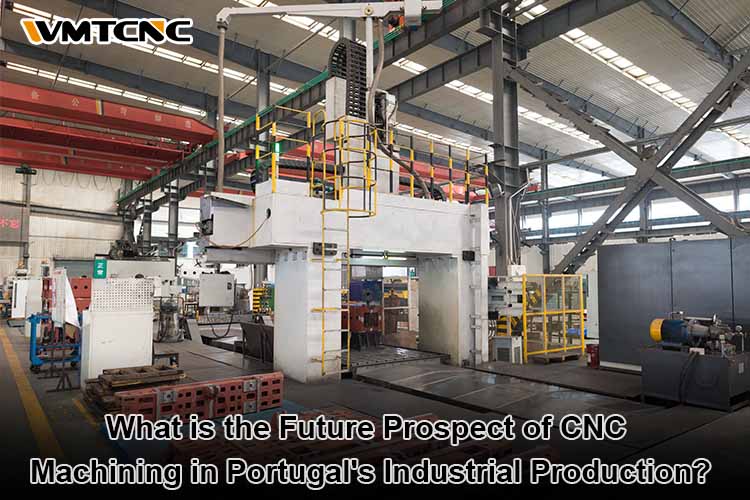
CNC (computer numerical control machining) technology has become an essential part of contemporary manufacturing as global manufacturing continues to develop. CNC technology is widely used in Portugal in a variety of sectors, such as precision manufacturing, automotive, and aerospace. Advanced CNC machining equipment is gradually being adopted by Portugal’s industrial manufacturing sector, especially in the production of precision molds and automotive components, to improve production efficiency, accuracy, and flexibility. One of the top providers of CNC equipment worldwide, WMTCNC has aggressively increased its market share in Portugal by assisting regional businesses in enhancing their production capacities and offering state-of-the-art technical assistance and dedicated equipment solutions.

Portugal’s metal forming machinery and machine tool manufacturing industry is projected to reach a market size of approximately €282.6 million by 2025.
Within the advanced manufacturing sector, CNC machining has become a significant component of the country’s exports.
Numerous specialized CNC machining service providers operate locally, such as Argo Baum, which specializes in multi-axis milling, turning, and micromechanics, serving clients across automotive, medical, aerospace, and other industries.
According to market data, Portugal’s CNC processing market, which includes milling, turning, and grinding, was estimated to be worth €1.3 billion in 2023. Of this market, milling, turning, and grinding accounted for about 40%, 35%, and 10% of the total.
These numbers show that Portugal has clear advantages in precision machining services and export-oriented manufacturing, despite having a small overall market size. The technology of CNC machining is presently advancing.
Automotive and Parts Manufacturing

Portugal serves as a major European hub for automotive parts manufacturing, hosting production lines for numerous car brands and suppliers. CNC machining applications here encompass engine components, transmissions, braking systems, and aluminum structural parts. As the automotive industry evolves toward electrification and lightweighting, CNC machining technology will continue playing a critical role.
For instance, in small-batch, high-precision part production, Portuguese CNC machining shops utilize efficient five-axis machining centers and automated equipment to meet stringent quality requirements.
Aerospace and Precision Manufacturing

Portugal’s aerospace industry is growing, especially in the markets for aviation maintenance and aircraft parts. Precision processing of high-strength materials, such as aluminum and titanium alloys, is made possible by CNC processing technology, which is essential for producing aerospace components. To meet the demand for high-precision parts from the aerospace industry, Portuguese CNC machining facilities are gradually implementing five-axis, high-speed milling, and multi-tasking equipment.
Mold Manufacturing and Export Processing

Portugal’s mold manufacturing industry has decades of experience, primarily serving sectors like automotive, consumer electronics, and medical devices. The application of CNC processing technology enables these manufacturers to achieve rapid prototyping, precision part machining, and mass production. Portugal is also driving a transition toward green manufacturing with high added value and low environmental impact, where CNC machining technology provides significant support.
Portugal possesses notable competitiveness in mold and precision part machining, particularly in the rapid production of precision molds and precision tools.

High Costs of Equipment and Technology Upgrades
Although many Portuguese companies are gradually adopting advanced CNC machining technologies, the high cost of premium CNC equipment places significant financial pressure on SMEs seeking equipment renewal and technological advancement.
Shortage of Technical Talent
Operating complex CNC equipment requires highly skilled technicians, yet Portugal’s CNC technical training system remains underdeveloped. This leads to an insufficient supply of high-end skilled personnel, directly impacting production efficiency and technological advancement.
Increasing Market Competition Pressure
Portugal’s machining industry faces low-cost competition from Eastern Europe and Asia. Therefore, it must enhance competitiveness in technology, service, and delivery times to stand out in the global market.
Smart Manufacturing Transformation
Portugal’s manufacturing sector is undergoing a digital and intelligent transformation. The integration of CNC machining technology with automation, the Internet of Things (IoT), and artificial intelligence (AI) will further enhance production efficiency, reduce labor costs, and propel Portuguese manufacturing toward higher value-added development.
Expanding Export Markets
As an EU member state, Portugal possesses formidable export capabilities. Many Portuguese manufacturers already export products worldwide by providing high-quality CNC processing services. As international demand grows, Portugal’s CNC machining sector will assume a more significant role in global manufacturing.
Environmental Sustainability and Green Manufacturing
With the global focus on sustainable development, Portugal’s manufacturing sector is transitioning toward green manufacturing. CNC processing technology inherently enables precise control over material consumption and waste reduction, aligning with green manufacturing trends.

Equipment Upgrades and Investment
It is advised that Portuguese SMEs invest more in high-precision CNC machinery and make a gradual switch to multi-station composite processing and five-axis machining. Portuguese manufacturers may decide to use high-performance, reasonably priced machine tools from Chinese companies like WMTCNC.
Talent Training and Collaboration
Companies should partner with local technical colleges and vocational training institutions to conduct regular CNC operation and programming training. This will enhance technicians’ capabilities and ensure CNC equipment operates at peak efficiency.
Production Optimization and Automation Upgrades
During the transition to smart manufacturing, Portuguese enterprises should increase investment in automated production lines. Integrating CNC processing with robotics and IoT technologies will boost production efficiency and machining precision, further strengthening market competitiveness.
Expanding Export Markets
Portuguese CNC machining factories should leverage EU trade advantages to expand into global markets, particularly in automotive, aerospace, and precision manufacturing sectors. Offering rapid, high-quality small-batch production services will strengthen international clients’ trust and reliance.
Portugal’s manufacturing sector is well-positioned for increased development opportunities due to technological advancements, the development of smart manufacturing, and rising market demand. Portugal’s CNC machining sector has a lot of promise, despite obstacles like the need for expensive equipment and a lack of qualified workers. Portugal can further increase its competitiveness in the global manufacturing landscape by investing in workforce training, upgrading its equipment, and implementing smart manufacturing transformation.


